

Welcome to the Daily Edge for Wednesday, May 31 – the last day of meteorological spring, which means summer is here (sort of)! You can turn that lucky fishin’ cap around, as winds are finally relenting over most of North Dakota and things will start REALLY heating up tomorrow! Not that you’re counting (we know you are), but deer archery season starts three months from tomorrow!
DAILY CONDITIONS: (All temps & times Bismarck)
WEATHER:
If there was a day of the week to play hooky, this is it!
Today: Wed 5/31 – We’re still going with “perfection.” Hi: 75 Lo: 45 Wind S @ 10 mph.
Tomorrow: Thu 6/1 – Downright August-like with south breezes. Hi: 87 Lo: 50 Wind S @ 15 mph.
SOLUNAR:
Wednesday, May 31, 2017
Sunrise: 5:52am Sunset: 9:29pm
Moonrise: 12:27pm Moonset: 1:52am
Overhead: 7:31pm Underfoot: 7:06am
Moon Phase: Waxing Crescent (39%)
EDGE HOUR: 6:00 – 7:00 am. While the whole day looks great for anything outdoors, capitalize on that sunrise-moon underfoot combination for a solid start to a day of fishing and still check those southern points and bends for fish that have been stacked up by five days of northerly gusts!
DAY RATING:

THREE THINGS:
A TRIO OF TRAILCAM TIPS
With the deer lottery deadline approaching, many hunters are already getting into pre-season mode and getting their trail cams ready for the summer scouting season. Here are some quick tips from Dakota Edge Outdoors to get the most out of your trail cam setups.
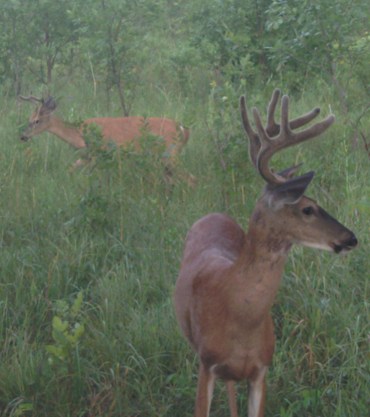
1) Know your camera – Seems simple enough, but controls and settings vary greatly from brand to brand, and even on models within a brand. Understanding video/still settings, megapixel resolution, and delay timers will help you get better pictures. When hanging a camera for the first time, take some practice photos by walking in front of the lens and listening for any audible clicks and watching for infrared lights. Bring a viewer or your laptop in the field to check out what goes on your memory card. For the guys out there, this may be one investment where it’s worth reading the instruction manual as well.
2) North-South – If possible, hang your camera with the lens pointed to the north (best) or south (second best), and as the deer trail or attractant will allow. This will help eliminate a lot of glare and washed-out photos from the rising and setting sun during those peak activity times of dawn and dusk where animals are moving. Nothing’s more disappointing than a bunch of whited-out pictures – well, maybe 1,215 pictures of wind-moving grass is – but you get the point, and we’ll take care of that in the final one.
3) View and trigger – Manage wind-induced photos by hanging cameras in areas with no tall vegetation, like small trees, brush or overgrown weeds that are easily moved by the wind and can set off the camera’s trigger mechanism with their motion. Alternatively, the sensitivity on some camera triggers can be adjusted to eliminate some wind-caused photos, while still capturing deer and other animals that pass in range. Take a look from where the camera is hanging in order to determine what might accidentally set it off and either trim those shrubs back, or reposition the lens (or wait until you find that first card filled with blowing grass photos – then the answer IS blowin’ in the wind…)
Give these tips a try as you set your digital ambush points out on the prairie this summer, and if you get a good photo of bigfoot, email it to Dakota Edge Outdoors!
Stay Sharp!
 dakotaedge.com