

By Nick Simonson
The approach of summer means active predators under the water feeding on bait and young panfish, getting their fill while the getting is good. In response, anglers match the hatch and utilize openwater trolling methods to key in on those aggressive walleyes that are on the feed, and trolling crankbaits is an effective way of covering the expanse and offering up a lure in the shape, size and shade of what those golden-sided schools are feeding on. While the process of trolling crankbaits runs from the simple act of letting line out and bumping a bait along the bottom, to the more complex calculation of line length and depth of that run, there are little things that can be done to up the success these ubiquitous lures bring in the warm water season.
Tune It Up
For the most success with any crankbait, it is best to check how the lure runs alongside the boat while moving at a desired speed. Crankbaits that dive and then wiggle left or right and break the surface are severely out of tune and will be less effective under the water. The typical rule for getting a crankbait to run straight is to bend the eye of the bait to the left if it is running to the right, or to the right if it is running to the left. Tweak the tie-in point ever so slightly, dip the lure back in the water and give it a little line to see if its pattern has straightened out. If it continues to roll to one side, bend the metal loop a little more, bit by bit bringing it to a straightforward wobbly run, ideal for triggering those reaction strikes. If the crank starts curving the other way, you’ve gone too far and should adjust in the other direction.
Dress It Up
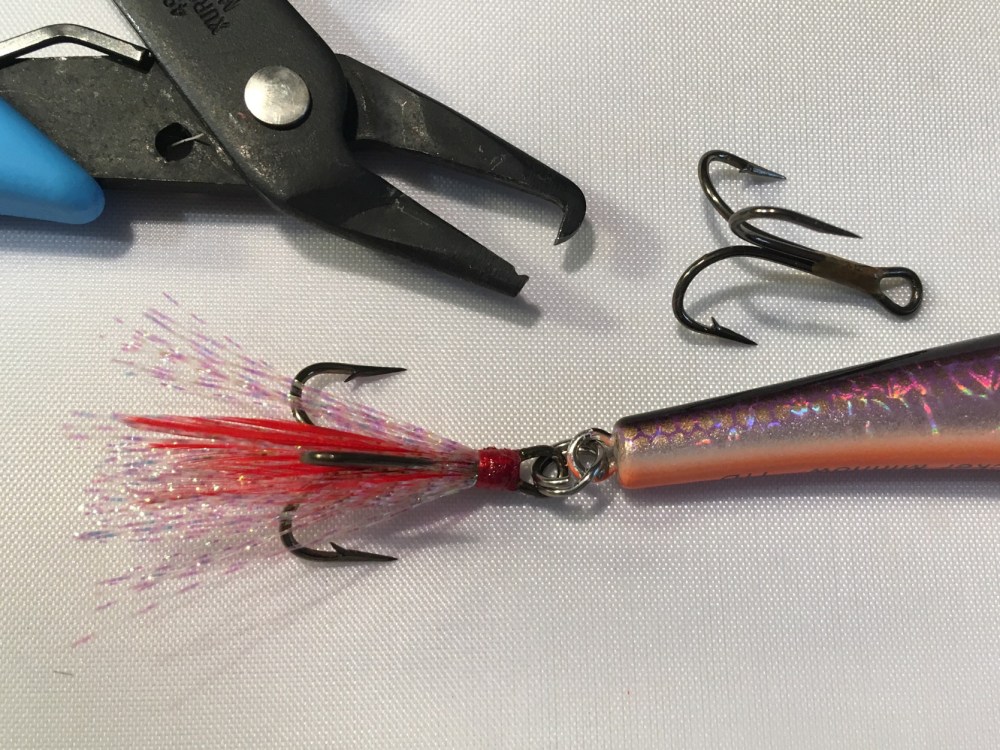
Another great summer addition is the dressing up of a crankbait’s rear treble hook. Removing the standard plain treble in favor of one dressed with hackle, hair or krystal flash can provide an enticing trigger for fish that are following a bait. Additionally, these dressed hooks extend the profile of the bait some, making it look a bit bigger and a lot like a larger meal for the same amount of effort. Tie some up on your own or grab a few from your favorite tackle shop or online dealer to pop into the rear split ring of a crankbait and add some extra flash and attraction – perfect for summer trolling.
Mark It Up
Odds are that at the beginning of the openwater season anglers start out with a number of the same crankbaits ready for deployment and to replace others that get beat up or hung up and lost on underwater timber or rocks. Over time, you may see that one of your four #7 Rapala Shad Raps seems to be outperforming the others and just catching more fish. It could be from a subtle nick in the bill, giving it a slightly more attractive wiggle, or a scratch on the paint or a slightly faded pattern that makes it look a bit different; whatever the reason, some crankbaits just produce better than others. When you identify that one bait, consider utilizing a permanent marker to draw a dot or small star on that particular fish-catching lure to distinguish it from the others in your tacklebox. This lets you grab it quickly from outing to outing and put the best bait forward from the get-go.
These are three simple ways to turn your crankbait fishing up a notch as summer patterns set in. Make sure your models are well tuned, give them some extra flash and flare, and make sure you know from the start which bait is your go-to.
Simonson is the lead writer and editor of Dakota Edge Outdoors.
Featured Photo: Crankbaits pay off by covering water and giving fish a target when they’re feeding aggressively. Tune and tweak each one to make sure it runs true and connects with fish.
 dakotaedge.com