

By Nick Simonson
I never get over the fact that likely a hundred different flies could be tied from the pelt of a rooster pheasant. If it weren’t for the need of dry fly hackle from those commercially raised and intricately bred chickens that have been developed by all the major names like Metz and Keough, I’d bet that a mature rooster pheasant could fill just about every other requirement for fly tying and lure crafting. Particularly at this time of year, as the first birds hit the game pouch and a moment is taken to admire them as part of the whole hunting experience, a quick review of their plumage provides ample inspiration at the vise.
From the tiny black feathers at the head and the white ones around the ring for which they’re named, these little plumes provide post material on those parachute dry flies and they can also be tied in to imitate the wings of a fallen insect laying flat on the water’s surface. So, while they aren’t dry fly feathers exactly, they do produce some cool effects that can be incorporated into those favorite surface offerings.
Down into the shoulders and upper back, the rooster sports bronze almond heart feathers which in smaller versions make up the wings of caddisflies and are almost a perfect match for just about any of the lighter-colored species that make up many solid summer hatches on streams or lakeshores that fish key in on for several weeks. The bigger ones too can be used as the wings of larger grasshopper patterns, and with a streak of black marker quickly become the covering for any darker cricket patterns that bluegills snap up without a second thought.
The church window feathers with their creamy mottled centers and auburn trim make fantastic wings on larger streamers, and often appear in nearly matching pairs, making it possible to create a fly that looks the same on the left and the right, thanks to the similarly sized plumes. The smaller versions also create incredible wet fly hackle and collars on spider patterns with just a couple wraps and when twitched through the water give the lifelike look of legs, gills or swimmerets that signal something alive and edible to fish.
The long rump feathers which turn from gray to shades of yellow, orange, green and aquamarine as they approach the tail make for amazing collars on larger streamers for smallmouth and largemouth bass. They provide soft motion in the water and a variety of accent colors which offer inspiration at the vise when putting established streamers together or in those moments of trying to tie up something new.
Underneath all of them are strands of marabou both big and small, with the best being on the bird’s underside near the tail. With tips that can range from gray to beige to almost black at times, these naturally-colored feathers create tails on amazing trout and crappie jigs, with that lifelike pulse from the marabou that few other materials – natural or manmade – can produce.

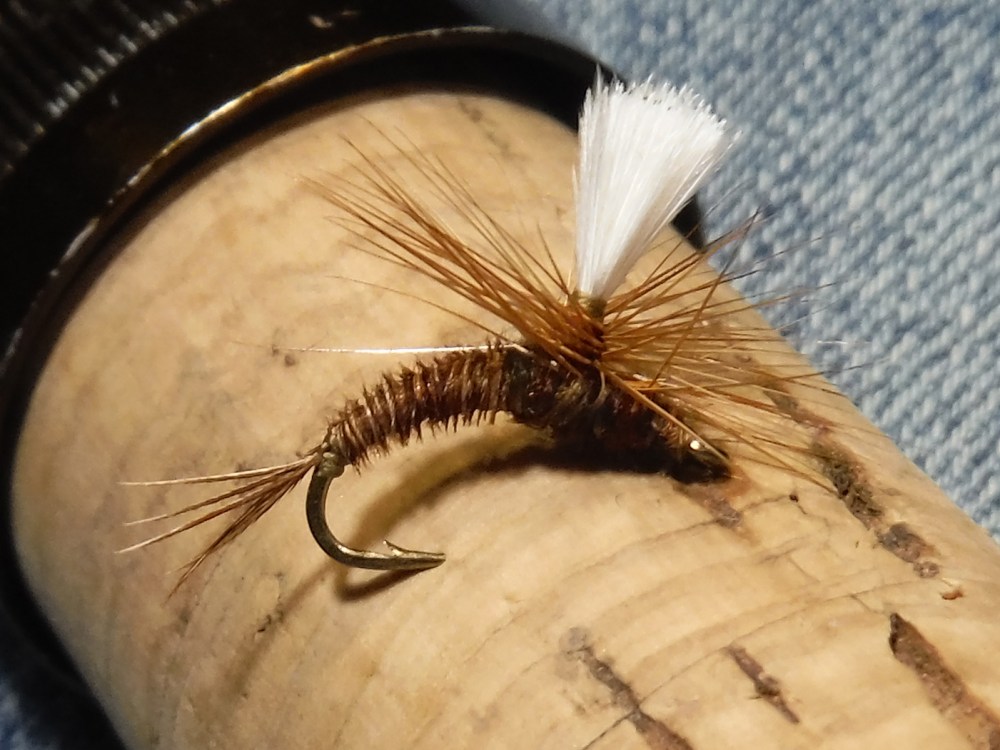
Finally, the ubiquitous tail feather fibers from a pheasant have likely caught more fish than any other nymph-making material out there. It makes sense too, when considering the adage that one basically needs something “a half inch, brown and buggy” to entice a take on the fly rod. The brown with the slightest hint of iridescence and soft edges on each fiber produces the wrapped nymph body which is standard in every fly box. Beyond that, they make incredible grasshopper legs, and gills and tails on many other nymph patterns as well.
Every pheasant in full color is a palette for producing some of the most reliable flies you’ll ever use on the water, whether you angle for bass and crappies on bigger rods, or bluegills and trout on something smaller. Take a moment to admire all of nature’s color crammed into one bird as the pheasant season gets going, and then another to imagine the possibility that each one presents at the vise this winter and on the water next spring and summer…in our outdoors.
Simonson is the lead writer and editor of Dakota Edge Outdoors.
Featured Photo: A Wide Selection. A mature rooster provides a selection of feathers which could fuel an entire winter of tying and fill a complete fly box with fish-catching patterns. Simonson Photo.
 dakotaedge.com